




If you’re planning on aging in place, you may be considering modifications to your bathroom. A walk-in bathtub can add comfort and safety to your home. But, like any home renovation project, finding the best walk-in bathtub for you can be a challenge.
A walk-in tub is a bathtub that was designed so you can simply walk into it without having to climb over a tub wall. Many walk-in tubs come with extra features to enhance safety and comfort, like handles, grips, and seats, as well as hot water jets, aromatherapy, and chromatherapy. These safe-soaker bathtubs have a leak-free door, so the step threshold is smaller, which means it’s easier to get in and out of them.
Walk-in tubs are deep water baths that can provide a relaxing effect. While typical bathtubs only have a depth of 13–14 inches, walk-in tubs can be as deep as 48 inches. They also may come with features like water jets and extra heating for maximum therapeutic benefits.
“Besides the jets, there is more room for more water and ability to do things like range of motion exercises in the bathtub,” said Dr. Tom Cornwell, national medical director of Village Medical at Home. “The greatest benefit for seniors is the reduced fall risk. There is also significant dignity associated with independence in bathing. Walk-in tubs can extend the time that frail elders and persons with disabilities can continue to safely bathe themselves.”
Best Walk-In Tubs We Reviewed:
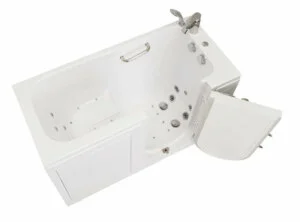
Best Value: Lounger Outward-Swing Door Tub
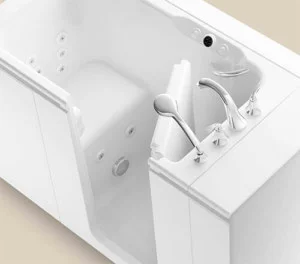
Best for Comfort: Kohler Hydrotherapy Tub
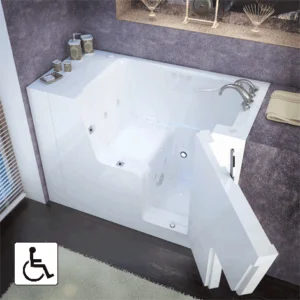
Best Wheelchair Accessible: Meditub Wheelchair Accessible Walk-in Tub
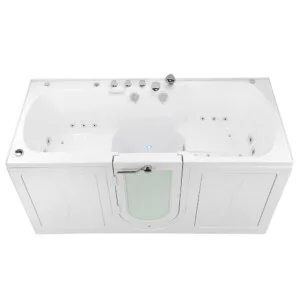
Best for Couples: Companion Two-Seat Tub
Best for Small Spaces: Acu-Stream Jetted Walk-In Bathtub
Best on a Budget: Ariel Soaker Tub
Most Durable Walk-in Tub: American Standard Acrylic Luxury
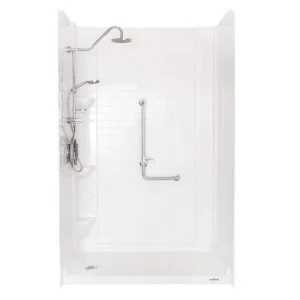
Best Walk-in Shower: Safe Step Walk-in Shower
Consider This Before Buying a Walk-In Tub
Accidents happen. Because bathrooms have so many wet, soapy surfaces, slip-ups can be common. According to the CDC, falls are the cause of 81.1% of nonfatal bathroom injuries, and the highest rates of injury occur in the shower or tub.
Walk-in tubs offer an easy-access solution so you can bathe in comfort and with peace-of-mind. But choosing a walk-in tub is a major investment. Before buying your tub, do some planning, which includes checking your home plumbing system.
10 Things to Consider Before Buying a Walk-In Tub
- Installation: Installing a walk-in tub is a home renovation project. Many retailers offer in-home consultations, installation services, and extra customer service to make it easier.
- Safety needs: If you need your tub to be secure, consider features like handrails, grab bars, and anti-slip surfaces. These should be properly positioned in your tub so they’re easy to hold onto.
- Water supply: Consider your home’s hot water capacity, water pressure, and other factors. We recommend consulting with a plumber before choosing your tub.
- Electricity supply: In addition to gallons of hot water, your walk-in tub has electrical needs. Extra hydrotherapy features need extra electricity too.
- Filling and draining: Because there are gallons of water involved, walk-in tubs take extra long to fill and drain. You might need to sit and wait in the tub while this happens. Fortunately, many brands now offer fast-drain and quick-fill technologies, which lessens the amount of time you’ll have to sit waiting for the water to fill or drain.
- Cleaning: Your tub needs to be cleaned regularly, just like any other surface in your bathroom. Choose a tub that’s easy for you to clean, or even a self-cleaning tub.
- Door: Walk-in tubs come with leak-proof door seals that trap water in during use. Decide if you will need wheelchair accessibility. Only tubs with outward swinging doors provide wheelchair access. However, inward swinging doors are typically considered easier to close once you’re in the tub, so choose which type of door you want on your tub with care.
- Size: Take measurements so you can be sure your tub is the right size for both your bathroom and occupant. You’ll want to consider the size of your bathroom, as well as what size will fit you comfortably. Many walk-in tub brands will send someone out to your house for a consultation.
- Financing: Not only do you have to consider the price of the tub, you’ll need to factor in installation costs and your tub’s warranty. Many manufacturers like Safe Step or American Standard offer financing programs.
- Accessibility: As mentioned previously, not all walk-in tubs are wheelchair accessible, so if this is a feature you need, you’ll want to choose a tub with an outward swinging door and confirm with the manufacturer that it’s accessible for wheelchairs. When purchasing a walk-in tub, it’s a good idea to make sure your tub is compliant with the Americans with Disabilities Act (ADA).
Types of Walk-In Tubs
Walk-in tubs aren’t a one-size-fits-all category. Different bathtubs offer different features, so you have options depending on your preferred bathing style. The different types are as follows:
- Soaker tubs are considered the standard of walk-in tubs. They are deep bathtubs with benches that are ideal for soaking and are beneficial to people with acute injuries and even general aches and pains.
- Wheelchair accessible tubs typically feature extra-wide doors and an outward swinging door to allow for easy transfer from your chair to the tub.
- Bariatric walk-in tubs are specially designed to hold occupants who weigh 300 pounds or more.
- Aromatherapy tubs include scent diffusers, so when the water jets pump warm streams of water, your chosen scent is released, benefiting mental health by encouraging relaxation.
- Hydrotherapy tubs are similar to hot tubs and feature massage jets designed to relieve muscle tension in your feet, legs, arms, back, and neck.
- Chromotherapy tubs have colored lights that can create soothing, therapeutic effects.
- Combination tubs include multiple features from a variety of walk-in tub types.
Crucial Walk-In Tub Features to Decide
There’s a lot to think about when shopping for walk-in tubs. Beyond how much fun you’ll have relaxing in your comfortable new bath, think of how this plumbing fixture will impact your life at home. Safety, convenience, and home spa features are three crucial factors to keep in mind when deciding which bathtub is right for you.
1. Safety
One of the main reasons to get a walk-in tub is because they’re safer to use than traditional tubs. To reduce the likelihood of slips, walk-in tubs usually have features to ensure you can safely step in and out of your bath, including:
- Low step-in: Low door thresholds are what makes these tubs walk-ins. When shopping, check the height of the step threshold. Some will offer lower thresholds than others.
- Handrails and grab bars: These safety bars are support bars that make it easier to get in and out of the tub. They should not only be sturdy, but positioned at the proper height.
- Anti-slip surfaces: A tub is anti-slip if the bottom of your tub has a rough texture to reduce falls. The rougher the surface, the more “grip” it has.
- Outward-swinging: Walk-in tubs are offered in different styles and can come with different types of doors. Some have inward swinging doors and others have outward swinging doors, but both serve a purpose. While you may need more room to open an outward swinging door, tubs that come in this style are typically the best tubs for easy transfer and can be wheelchair accessible.
- Wheelchair accessibility: If you use a wheelchair, this will be a key feature. Choose a tub designed for easy transfer to and from a chair or a walk-in shower designed for wheelchair users.
2. Convenience
Because they’re designed to be accessible, walk-in tubs may be easier to use than standard tubs. Consider your tub’s maintenance (like cleaning and potential repairs). Factors to take into account include:
- Fast-fill tubs: Tubs that are fast-fill have one or more faucets designed to reduce the amount of time you spend waiting for your tub to fill. Don’t forget you’ll be sitting in the tub during this part. Some of these tubs offer heated surfaces to soothe the neck and back while you wait for the tub to fill.
- Quick-drain tubs: These tubs allow water to exit your tub at a quicker pace. That means you don’t have to sit and wait as long to get out of your bath once you’re done bathing.
- Self-cleaning: Systems that self-clean help keep your tub pristine. Typically, self-cleaning tubs release a disinfecting liquid that can assist in killing bacteria that lives on the surface of your tub.
- Warranty: Make sure to read your warranty carefully. Some manufacturers provide more extensive warranties than other brands. Consider whether your warranty will cover replacement parts or repairs your tub may need in the future.
- Size: Consider the size of your bathroom, as well as the tub’s intended occupant. Be sure to choose a tub with a seat large enough to sit on comfortably.
3. Home Spa Features
Walk-in tubs can come with added perks not found in your everyday bathtub. Many manufacturers offer an array of spa-like features you can add to your walk-in tub, including:
- Whirlpool (hydrotherapy): These tubs have a motor that circulates water, creating a jacuzzi-like experience. It’s sometimes recommended for physical therapy and may have pain-relieving benefits.
- Aromatherapy: This feature uses essential oils to create soothing, relaxing scents while you bathe. Massage jets often pair with aromatherapy tub features and may have mood-boosting benefits.
- Chromatherapy: Also known as light therapy, the use of colored light is typically used to enhance aesthetics and relaxation, but it can potentially have a wide range of therapeutic benefits.
- Other massage jets: Jets can help massage specific body parts like your feet, legs, and back. Most tubs use hydrotherapy with hot water jets, but air jets are common too.
Home spa features are great for relaxation and may also have therapeutic benefits. However, they often come with extra home plumbing and electrical requirements.
Potential Health Benefits From Walk-in Baths
Using a walk-in bath can have potential health benefits. Some home spa features, like hydrotherapy, may be used in a clinical setting (like physical therapy). Additionally, certain home bathing practices may have medical benefits, including:
- Heart health: Though findings vary, there is some clinical evidence that heat therapy can reduce your risk of cardiovascular disease. Hot water immersion (i.e soaking in a nice, relaxing bath) is one method of heat therapy you can try at home. It’s important to consult your doctor or therapist to get specifics about temperatures.
- Arthritis: Symptoms may be relieved with various hydrotherapy techniques. Warm water helps with joint pain relief, while cool water is recommended for any bodily swelling. You can also use hydromassage tub features to loosen up stiff joints. While there’s a lack of research on hydrotherapy bathing, it’s shown to help with temporary pain relief and has no adverse effects.
- Mental health: Regular water immersion may improve mental health, which is why warm baths are regularly recommended as a self-care practice. One study found that, compared to those who took showers, bathers were more likely to experience a reduction in stress, fatigue, pain, tension, anxiety, and anger over a two-week period. Baths make you happy—it’s science.