



What Are Invisible Hearing Aids?
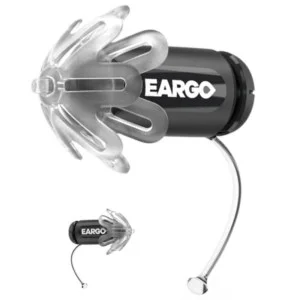
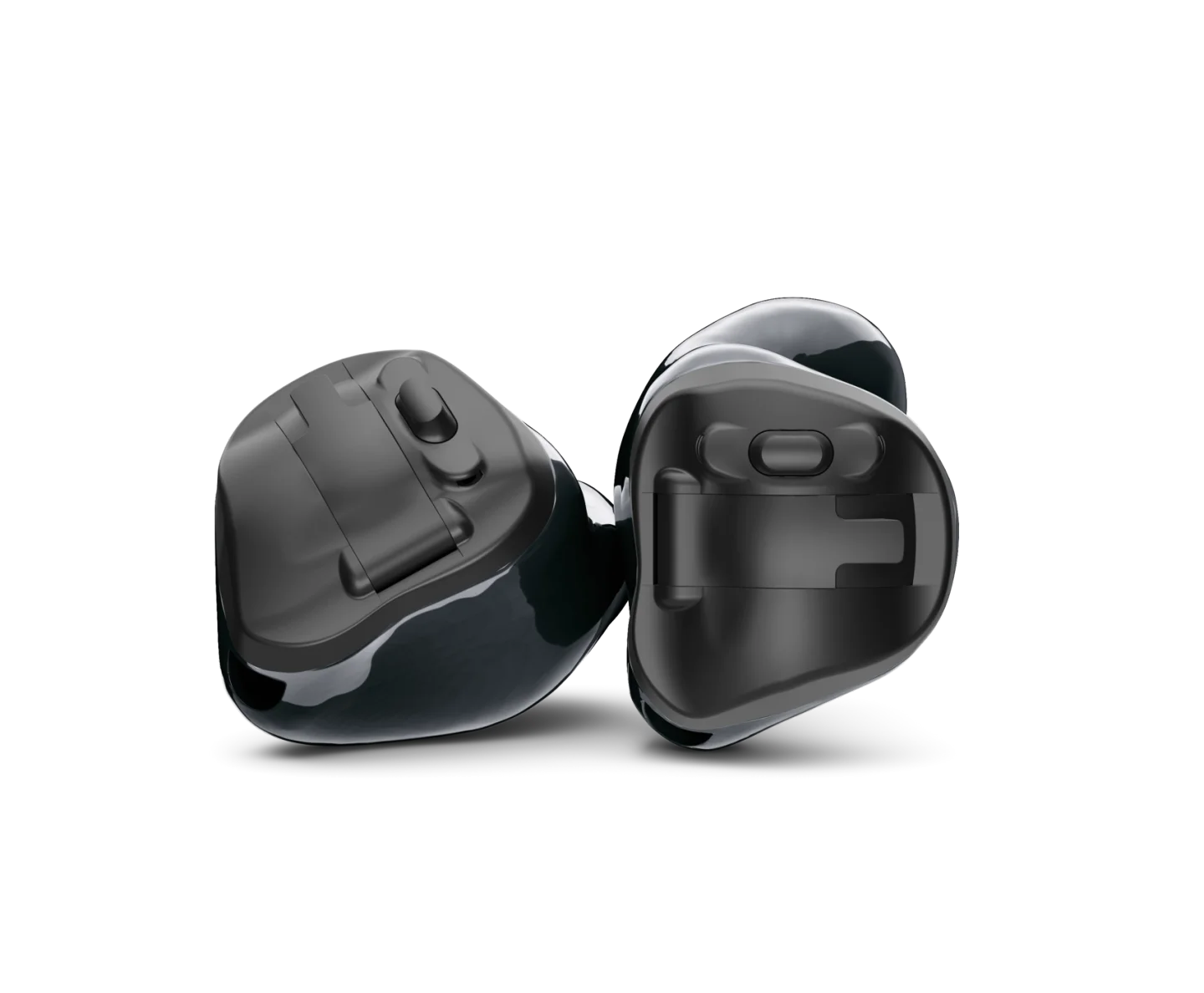
Invisible hearing aids can’t be seen when worn. Some invisible hearing aids must be inserted into the ear canal by an audiologist and remain there for several months. More typically, you insert the hearing aids yourself and remove them daily by pulling on their removal threads, or clear plastic strings attached to their outermost end. Like with all hearing aid styles, invisible hearing aids have their pros and cons.
Pros
Discreet
More comfortable for people who wear glasses
Less feedback and good sound amplification
Cons
Features and battery life limited by small size
Can be difficult to handle and place in the ear
Limited to treating less severe hearing loss
Can create an echo effect for high frequency hearing loss
Who Are Invisible Hearing Aids For?
Invisible hearing aids are best for people with mild to moderate hearing loss. This is because their small size limits space for the technology that’s needed to treat people with more severe hearing loss. Another drawback of their small size: They’re not as easy to clean, change the batteries, or place in the ear canal, especially if you have arthritis or any condition that affects hand dexterity.
“Ear canals are like snowflakes—there are no two alike,” said Heather Malyuk, Au.D., Head of Audiology, at Tuned, “As such, not every ear canal is comfortable with these styles of hearing aids. They need to have an unremarkable ear canal because the manufacturer needs to be able to fit all of the parts into the shape of their specific ears. If the ear canals are too narrow, too curvy, or have any anatomical abnormalities, this is much harder for the manufacturer to do.”
Invisible hearing aids, compared to behind-the-ear hearing aids, can also be more comfortable for people who wear glasses, masks, or oxygen tubing because the hearing aids don’t compete for space behind the ear, according to Sarah Lundstrom, Au.D., of HearCare Audiology.
Types of Invisible Hearing Aids
There are two types of invisible hearing aids: invisible-in-canal (IIC) hearing aids and completely-in-canal (CIC) hearing aids. IIC hearing aids are the smaller of the two types, and only some CIC hearing aids are considered invisible, according to Melissa Karp, Au.D. with Audiology & Hearing Services of Charlotte, North Carolina.
IIC hearing aids rest deeper in the ear canal than CICs. “Someone with an average to large ear canal is a more appropriate candidate [for an IIC-style hearing aid],” Karp said.
Both IICs and CICs require either more frequent charging for rechargeable models or more frequent battery changes for disposable battery models because they can fit only small batteries that don’t last as long. Also because of their small size, IICs and CICs do not typically have volume control buttons directly built onto the hearing aids. CICs are a bit larger than IICs, which, for some CIC models, allows room for Bluetooth audio streaming.
In addition to their cosmetic appeal, invisible hearing aids have audiological benefits from sitting so deeply in the ear canal.
“The closer the speaker of the hearing aid to the eardrum, the less output is needed. [A] benefit of less output needed is less risk of acoustic feedback,” Karp explained.
Acoustic feedback is a whistling sound that can occur when you wear hearing aids. Invisible hearing aids are associated with less whistling and wind noise.
Discreet Hearing Aids
Other discreet, but slightly larger, hearing aid options exist. They are not considered invisible hearing aids because they don’t disappear into the canal. Discreet hearing aids are designed to be less noticeable, yet still have space for housing more advanced technology than invisible hearing aids. These technologies can include Bluetooth streaming, telecoil, longer battery life, and volume controls for manually controlling volume on the hearing aid. Because larger hearing aids have more room to fit technology, they can also treat more severe types of hearing loss.
Here are three discreet hearing aid options:
Mini Behind-the-Ear (Mini BTE)
Mini BTE hearing aids are a slimmer version of traditional BTE hearing aids. They discreetly tuck away behind the upper ear and loop around to deliver amplified sounds into the ear canal.
In-the-Ear (ITE)
ITE hearing aids contain no hard shell that hides behind the upper ear like mini BTE. But unlike invisible hearing aids, ITE fit inside the outer ear rather than in the ear canal, making them visible when worn. This style is larger than invisible and in-the-canal (ITC) styles and can pick up more wind noise than smaller styles.
In-the-Canal (ITC)
ITC hearing aids insert into the canal but stick out a bit past the opening of the ear canal, making them visible to others. These hearing aids are smaller than ITE and mini BTE, so their battery life is usually shorter than these larger styles but longer than invisible styles.
How We Research and Test Invisible Hearing Aids
Our experts research and recommend products that can help give you a better quality of life. Using our high standards and rigorous testing methodology, we’ve spent more than 4,000 hours, collectively, researching the best hearing aids to help you find the device that’s best for you. Throughout our research process, we did the following:
- Consulted with audiologists and geriatric care experts
- Mystery shopped the brands
- Surveyed hundreds of hearing aid users
- Tested various models of hearing aids
- Interviewed experts in the field
- Read thousands of verified customer reviews
We compared invisible hearing aids across brands´ sound technology, features, costs, and purchasing and maintenance requirements.
How Much Do Invisible Hearing Aids Cost?
Many invisible hearing aids are custom-fit prescription hearing aids. Some brands, like Eargo and Embrace Hearing, are not custom fit and can be purchased over the counter (OTC). Prescription, invisible hearing aids are typically more expensive because they are custom-fit to your ear canal and can be purchased only at hearing clinics after consultations with an audiologist. OTC invisible hearing aids can be purchased online or in stores without seeing an audiologist, although some brands have remote consultations available if needed. Based on our review of both OTC and prescription invisible hearing aids, costs range from $1,400-$8,000 per pair.
Despite a more discreet design, invisible hearing aids aren’t necessarily more expensive than other hearing aid styles, Lundstrom explained. “At many practices, the style is not the main factor in price. Providers may base the price on the computer chip technology rather than the style of the devices.”